Creating gardens on the coast is always a challenge. There are all kinds of things to consider, like salt air, strong winds and sandy soil. Added to these natural limits, is the fact that the garden is often just the foreground to the real view - the ocean. So it needs to compliment rather than try to steal the show.
This garden is actually the second garden Ive done for these particular clients - they moved from their previous home in Morningside when they found this odd 1970s house in the La Lucia area of Durban with potentially amazing views of the ocean.
They kept the general layout of the house and completely gutted it, but essentially started again. The garden itself was a neglected, overgrown mix of plants that sloped down to the neighbours house below.
This was a really great project for a number of reasons. I have the benefits of having a good relationship with both the client and the architect, and that, coupled with being involved right from the start, I was able to add my 2 cents worth to the project as it evolved. Also, having the advantage of being part of the project from the start - almost 3 years in total, it gave me the time to really digest the site and the design. These are definitely key ingredients in making a successful garden.
Too often in landscape design, everybody involved is in a rush. We designers, are usually brought in at the last minute, and are usually the last on site, and so we often bear the brunt of the clients lack of patience because of the usual contractors delays. Being last in the chain also has other disadvantages. In most cases, projects run over budget, and the easiest place to save money is by cutting back on the luxury areas like landscaping. But its not all frustration. You also get the best look at the finished product, and share in some of the excitement that the client is beginning to feel as they see the project nearing completion. This really makes for great job satisfaction.
 |
| My clients previous garden, with roses and lavender |
My clients were wanting the garden to be quite different to their previous garden, which was full of roses, and quite formal. I was relieved to hear this, because the property was quite exposed on the top of a dune, which meant we would be using a fairly limited range of plants. Roses or similar exotic plants would need an inordinate amount of attention to keep them alive - let alone looking good. The words Aloe and stone were mentioned during our preliminary discussion about the garden, and I could feel my excitement levels rising...
Although they did have one request, coming from a relatively small garden they would want it to be as open as possible, with as big a lawn area as possible.
 |
| The "Blank Slate" - you can see the unusable lawn, and the house below, that needs screening. |
We removed almost all of the plants while the builder began the demolition of the existing house. The only plant that had any real value to the garden was a huge milkwood in the driveway. The driveway and boundary wall was laid out to make sure that it was kept safe.
One of the first steps, as in most landscape designs, was to sort out levels. As Ive mentioned before, creating level areas makes the garden much more user-friendly. Keeping the garden on the same level as the house means that people are more likely to spill out into the lawn.
The retaining wall below the garden had a height restriction which was well below the homes ground floor level - this would mean I would have to do some lateral thinking to try to find a way of getting the lawn level right.
 |
| Due to height restrictions, the top of the retaining wall was still well below the level we needed it to be |
The second challenge in the design of the garden, was the proximity of the house in front. From the ground level of the house it not only partially blocks the view of the ocean, but is the last thing you want to be looking at when youre sitting in your lounge or dining area.
The solution would be to raise the garden to the groundfloor level. This meant that we would be able to keep the planting relatively low, and still screen the neighbours house.
Making use of the attractive vistas, and hiding the less attractive can be one of the hardest balancing acts in a garden design. It needs to be done subtly, but effectively.
This garden was one of the trickiest Ive worked on, because of the multiple levels and views in the house. Also, having the beautiful sea views and the big house both dominating the front view, made it particularly difficult.
 |
| Oehme & Van Sweden - Chicago Botanic Gardens |
I began the design of the garden with a picture in my mind of flowing grasses, and mass planting along the lines of an Oehme and Van Sweden garden. They use a more naturalistic style, which would suit the site, and the use of indigenous plants. The challenge would be to create this feel in the narrow space available for the planting.
I also had a picture of the way sand forms ripples on the beach, and thought Id like to capture something of that feel in the design. This would translate into building up berms of sand, which would make a great platform on which to plant. Slowly, the design was beginning to take shape.
I took some photos of the garden, and used these to trace and sketch the picture that was beginning to form in my head.
After all the planning comes the hard slog. To begin with, we had to move about 80m3 of soil into the garden, and shape and level, and re-shape and re-level, and then do it all over again. Finally, the structure was all there just waiting to be dressed up with plants. Were almost there now, but Ill post a follow-up on the planting once weve completed it.


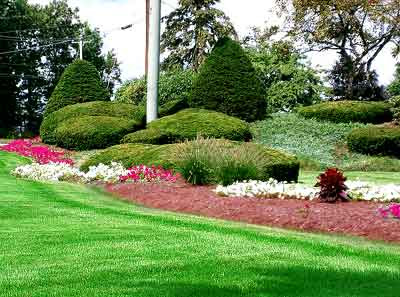
 Everyone dreams of having a Beautiful home - their dream home! It usually comprises of a big house, a swimming pool and an amazing Garden. Well, its not possible if you dont plan it all before you begin. So, lets just take a look at a few of the Best Landscape design practices that you could employ when planning out the Landscape of your Garden: Do the right things at the right places One of the most important facts that you should know about when designing your Garden be it the front yard or the back yard is that of striking a balance. Your Garden is going to look good only if everything is done in a sort of proportion.


 As glamorous Bathrooms become more and more desirable, their inclusion in a home inevitably adds to the value of the property. It was not long ago that the idea of an en-suite Bathroom to a master bedroom was exceptional and decadent. Nowadays it is a requirement for many. Conversely when viewing a prospective property to purchase, the sight of a dirty Bathroom with stains under the taps and mould in the grout lines is a real turn-off. One nice trick that can be learned from the boutique hotel is the giant headboard. Where a bedroom is large enough to move the bed away from the wall, it is possible to build a freestanding wall that can act as a headboard (often containing bespoke bedside units with reading lights and recesses for books or a glass of water). In the space behind, fit a small en-suite Bathroom, possibly with a walk-in shower entered from one side and a WC and basin from the other.
